Coffee Tariff 2025: Why the No Coffee Tax Act Won't Save Your Business
The No Coffee Tax Act promises coffee tariff relief, but coffee tariffs aren't your real problem. Learn the 5 strategies roasters use to survive price surges without political rescue.
COFFEE MARKET
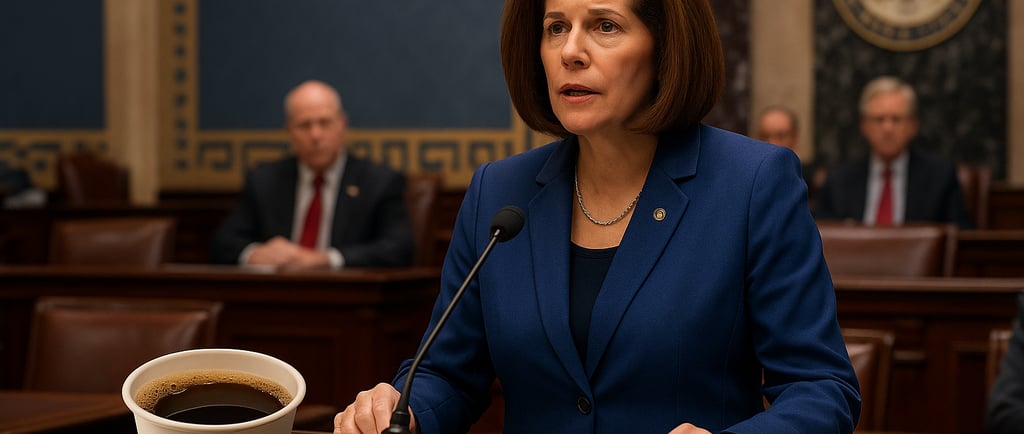
On November 14, 2025, U.S. Representatives Aaron Bean and Brittany Pettersen introduced the "No Coffee Tax Act" to the House of Representatives.
The bill proposes eliminating the 7.5% tariff on coffee imports. Politicians framed it as relief for American coffee businesses struggling with commodity prices that jumped 55% year-over-year.
If you're a coffee entrepreneur reading headlines about tariff relief and thinking "finally, some help," I need to stop you right there.
Because here's what the politicians didn't tell you in their press release: This bill won't solve your real problem. It might not even pass. And even if it does, you're still in serious trouble.
Let me explain why you're celebrating the wrong solution to the wrong problem.
Right now, while you're waiting for politicians to save your margins, three things are happening:
First, you're bleeding money every single day. Arabica futures hit $3.44/lb in mid-November 2025 – the highest level since 1977. That 7.5% tariff you're worried about? It adds roughly $0.20 per pound to your costs. Meanwhile, the 55% price surge over the past year added $1.23 per pound.
Do the math: you're focused on recovering 20 cents while ignoring the $1.23 elephant crushing your warehouse.
Second, you're losing competitive positioning while you wait. Your competitors aren't sitting around hoping for government intervention. The smart ones already restructured their supply chains, locked in forward contracts, and raised prices strategically. They're capturing market share from roasters who froze like deer in headlights, paralyzed by the false hope of political rescue.
Every week you delay action is a week your competitors get stronger while you get weaker.
Third – and this is the part that should terrify you – you're training yourself to be helpless. You're conditioning your business to wait for external salvation instead of building internal resilience. When the next crisis hits (and it will, because coffee is a volatile commodity), you'll be even less prepared because you've spent months practicing dependency instead of adaptation.
Here's the brutal truth nobody wants to say out loud: Even if the No Coffee Tax Act passes tomorrow, it won't save roasters who haven't already solved their fundamental business problems.
A 7.5% tariff reduction doesn't fix:
Razor-thin margins that can't absorb any shock
Customer bases unwilling to pay premium prices
Zero pricing power because you never built brand value
Supply chains with no flexibility or diversification
Operating models designed for stable commodity prices
The tariff is a symptom, not the disease. And treating symptoms while ignoring the disease is how businesses die slowly, wondering what went wrong.
Let me show you what actually works – not political promises, but strategic actions that coffee entrepreneurs can implement this week.
Strategy 1: Transparent Value Communication
A mid-sized roastery in Amsterdam faced the exact same price surge you're dealing with. Instead of hiding behind tariff excuses or absorbing costs silently, they launched what they called a "Coffee Reality Report."
Every month, they sent customers a simple breakdown:
Green coffee cost per kg (with charts showing the 18-month trend)
Their actual margin per bag sold
How much goes to farmers vs. logistics vs. operations
What price adjustments they needed to survive
The result? Customer retention actually increased during price hikes. Why? Because transparency builds trust, and trust creates pricing power that no tariff can give you.
You don't need government relief when customers understand and support your pricing because they see the real economics.
Strategy 2: Strategic Product Architecture
Here's what smart roasters did while others waited for tariff relief:
They restructured their product lines into three tiers:
Anchor Products (15-20% margin): Everyday blends at competitive prices to maintain volume and market presence
Premium Single-Origins (35-45% margin): Where they actually make money, for customers willing to pay for quality
Limited Micro-Lots (50%+ margin): Small-batch, high-value offerings that build brand prestige
This isn't complicated business strategy. It's basic portfolio management that most roasters never implement because they're too busy complaining about commodity prices.
The tariff doesn't matter when you've built a product portfolio where 30% of your SKUs generate 70% of your profit.
Strategy 3: Forward Contract Discipline
A roastery in Lyon locked in forward contracts for 60% of their annual volume when prices were at $2.85/lb in early 2024. When prices hit $3.44/lb in November 2025, they had massive competitive advantage.
Did they need tariff relief? No. They had price certainty while competitors scrambled.
But here's what makes this strategy brilliant: they didn't lock in 100%. They kept 40% exposed to spot market for two reasons:
1. If prices dropped, they could capitalize on cheaper beans
2. Flexibility to take advantage of exceptional micro-lots that appear unexpectedly
Strategy 4: Customer Education as Competitive Moat
The roasters winning right now aren't the ones with the lowest prices. They're the ones whose customers understand coffee economics.
Start publishing content that educates your market:
How commodity prices work and why they fluctuate
What climate change is doing to coffee-growing regions
Why paying farmers more isn't charity but supply chain resilience
How to taste and appreciate quality differences
When customers understand that your $18/kg coffee represents incredible value compared to commodity alternatives, price resistance evaporates.
Education builds pricing power that tariffs can't touch.
Strategy 5: Operational Efficiency Audits
While waiting for tariff relief, have you audited your actual operating costs?
A roastery in Berlin discovered they were losing 8% margin to:
Packaging waste from over-ordering
Energy costs from inefficient roasting schedules
Labor inefficiency from poor workflow design
Inventory holding costs from bad forecasting
They recovered that 8% margin through operational improvements – more than the 7.5% tariff would have saved them.
The solution wasn't political. It was operational discipline.
Here's your 30-day action plan to build resilience that doesn't depend on politicians
Week 1: Price Transparency
Create a simple one-page "coffee economics" document
Show customers your real costs and margins
Explain why prices need to adjust
Send it to your entire customer list with a personal note
Week 2: Product Portfolio Restructure
Audit your current margins by SKU
Identify which products are actually profitable
Design a three-tier architecture (volume/profit/prestige)
Phase out or reprice products with margins below 20%
Week 3: Supply Chain Resilience
Contact three new potential suppliers in different regions
Get quotes for forward contracts covering 3-6 months
Diversify origin exposure to reduce climate risk
Build relationships before you desperately need them
Week 4: Customer Education Launch
Write one educational article about coffee pricing
Share it on every channel you have
Start a monthly "coffee reality" update
Make transparency your competitive advantage
Immediate Action (Today):
Stop waiting for the No Coffee Tax Act to save you. It won't.
The roasters who survive and thrive are the ones who build pricing power through transparency, operational excellence, strategic sourcing, and customer education.
The tariff is a distraction. Your real work starts now.
Want help implementing these strategies? Download my free ebook "The Profitable Pour" at matteoborea.it – it contains the exact pricing frameworks and margin optimization strategies that helped roasters navigate the 2024-2025 price surge successfully.
UPDATE (January 2026): On November 6, 2025, Sen. Catherine Cortez Masto attempted to fast-track the No Coffee Tax Act through unanimous consent in the US Senate. Sen. Mike Crapo (R-Idaho), Chair of the Senate Finance Committee, objected, arguing against "one-off exceptions" without a broader negotiating strategy. The bill returned to committee, where it remains stalled with no scheduled hearings. GovTrack analysis gives it a 6% chance of passing committee and just 3% chance of becoming law. The political rescue roasters were waiting for isn't coming. Build business resilience now.